

How to Remove Car Odours That Keep Coming Back

A clean-looking interior can still be let down by the moment you open the door. That lingering damp smell after rain, a trace of last week’s takeaway, or stale smoke trapped in the headlining can make even a well-kept car feel neglected. Knowing how to remove car odours properly means treating the cause, not simply masking it with a hanging air freshener.
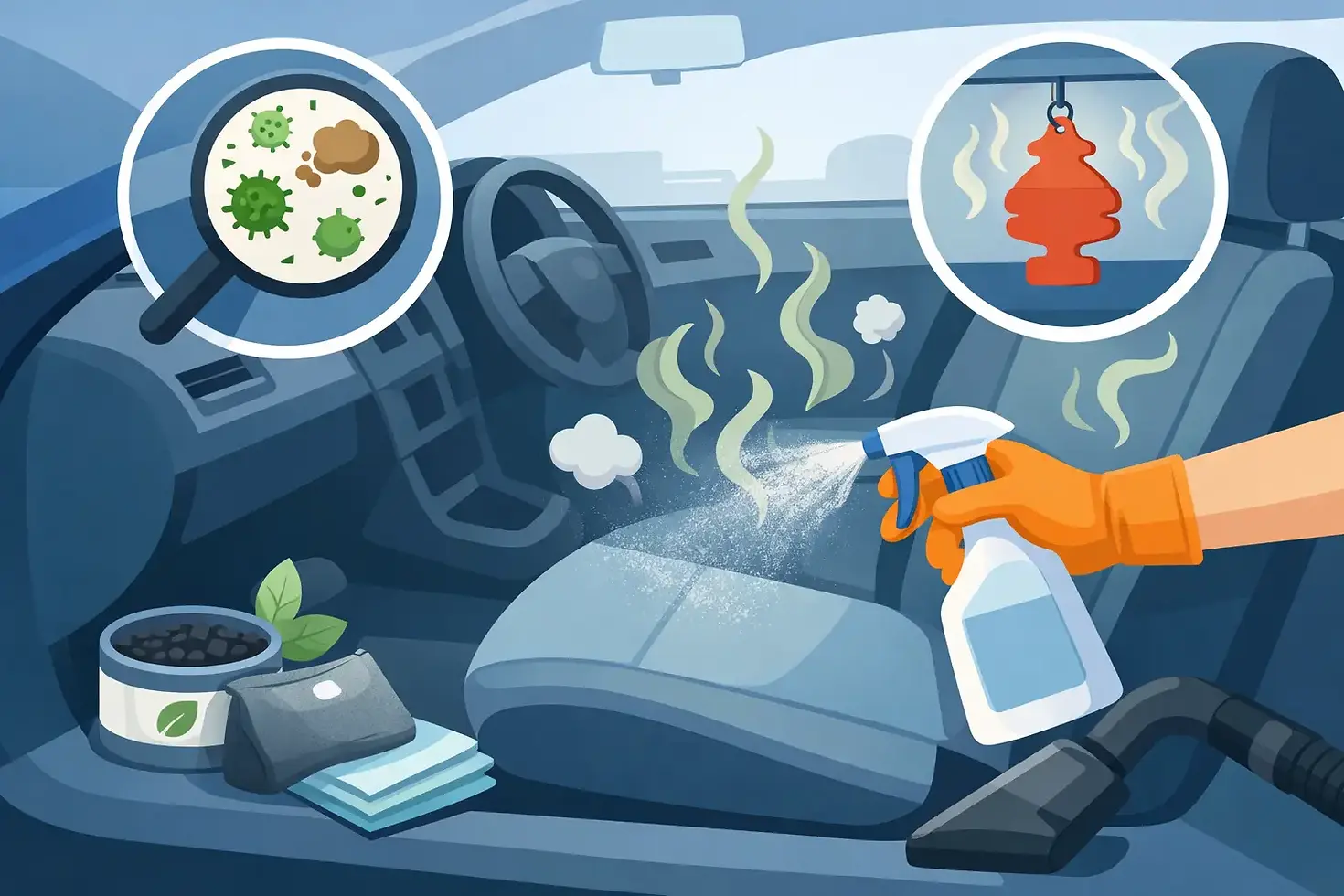
A fragrance may make the cabin more pleasant for a day or two, but it cannot remove bacteria, mould spores, food residue or moisture held deep in the fabrics. The best result comes from methodical cleaning, careful drying and, where necessary, specialist odour treatment.
Find the source before you clean
Car odours rarely appear without a reason. Before reaching for a cleaner, take a few minutes to inspect the cabin in daylight. Remove the mats, look beneath the seats, open every storage compartment and check the boot. Small spills and forgotten food are common culprits, particularly in family cars, while wet coats, muddy footwear and sports kit can leave carpets smelling musty.
The smell itself often provides a useful clue. A sour or damp odour usually points to moisture in the carpets, underlay or boot. A sweet smell can indicate a coolant leak, which should be checked promptly by a qualified mechanic. Mustiness when the blower starts may be coming from the air-conditioning system or a clogged cabin filter. If the smell is strongest after the car has been closed overnight, it is often trapped in upholstery, the headlining or the ventilation system.
Do not overlook the spare-wheel well. Water can enter through worn boot seals, blocked drainage channels or a damaged light seal, then sit unnoticed beneath the boot floor. Cleaning the visible carpet without finding that moisture will only postpone the problem.
How to remove car odours from carpets and seats
Fabric is highly absorbent, which is why a dropped coffee, milkshake or wet dog can affect a cabin long after the original spill has dried. Start by thoroughly vacuuming the seats, carpets, mats and boot, paying particular attention to seat runners, door pockets and the gap between the rear seat and backrest. Dry debris, hair and crumbs hold odours and reduce the effectiveness of any cleaner applied afterwards.
For a recent spill, blot it immediately with a clean microfibre cloth. Avoid scrubbing, as this pushes the liquid deeper into the fibres and can spread the affected area. Use a suitable interior cleaner or fabric cleaner according to its directions, working gently with a soft brush where needed. The goal is to lift the contamination, not soak the seat.
Older stains often need extraction rather than surface cleaning. A professional upholstery and carpet extraction process flushes out embedded dirt and residue while recovering the contaminated solution. This is especially valuable for milk, pet accidents, drinks and food spills, which can leave a persistent smell below the carpet surface.
Drying is the part many DIY attempts miss. If carpets are left wet, a fresh damp odour can replace the original problem. Keep doors open where practical, use airflow and allow enough time for the interior to dry fully before closing the vehicle. In colder or wetter British weather, this may take longer than expected.
Treat the mats separately
Rubber mats are straightforward: remove them, wash them with an appropriate cleaner, rinse and dry them completely. Fabric mats require more patience. Vacuum both sides, clean the fibres, extract if necessary and leave them to dry outside the car. Returning damp mats to a freshly cleaned footwell is a quick way to bring moisture and odour straight back.
Smoke, pet and food smells need a deeper approach
Smoke is one of the most difficult odours to remove because it settles on virtually every interior surface. It is not just in the seats and carpets. It can cling to the headlining, glass, dashboard, seatbelts, door cards and ventilation ducts. A proper smoke treatment involves a careful clean of all hard surfaces, suitable cleaning of fabrics and glass, and attention to the cabin filter and air-conditioning system.
Be cautious around the headlining. It is lightly bonded and can sag if it is oversaturated or aggressively scrubbed. Use minimal product on a clean cloth and work with a gentle touch. For heavy smoke contamination, professional treatment is usually the safer choice, particularly in prestige vehicles where interior materials need expert handling.
Pet odours also need more than a quick vacuum. Hair collects in places that are difficult to reach, including seat creases, carpet edges and the boot lining. Any accident must be treated with an enzyme-based odour remover designed to break down organic residue. General-purpose fragrances may cover the smell briefly, but they do not deal with the source.
Food smells depend on what has been spilled. Greasy takeaway residue can transfer to seats, centre consoles and door cards, while milk-based drinks can sour beneath the carpet. Clean every area the item may have touched, including cupholders and seatbelt buckles. If a spill has reached the underlay, extraction and controlled drying are often essential.
Do not forget the air-conditioning system
If the cabin smells fine until you turn on the fan, the problem is likely in the ventilation system. Moisture can build up around the evaporator, encouraging bacteria and mildew. A dirty cabin pollen filter can also hold dust, debris and unpleasant smells.
Replacing the cabin filter at the manufacturer’s recommended interval is a sensible starting point, particularly if you drive regularly on rural roads or in heavy traffic. An air-conditioning sanitising treatment can then help clean the system and neutralise odours circulating through the vents. If there is weak airflow, repeated misting on the windscreen, or a strong musty smell that returns quickly, arrange for the system to be inspected as there may be a drainage or air-conditioning fault behind it.
Why air fresheners are not the answer
There is nothing wrong with a subtle air freshener once the interior is genuinely clean. The issue is using one as the first and only solution. Heavy fragrance mixed with smoke, damp or pet odour can make a cabin feel more unpleasant, not less.
A better order is simple: remove debris, identify contamination, clean the affected materials, dry the interior thoroughly and then add a light finishing scent if desired. This leaves the car smelling clean rather than artificially perfumed.
When professional odour removal is worthwhile
Some odours are straightforward to manage at home, especially if you catch a spill early. Others require equipment, products and time that are difficult to replicate on the driveway. Deep contamination in carpets, recurring dampness, heavy smoke residue, pet accidents and mould all benefit from a more thorough inspection and treatment.
A professional interior detail can include intensive vacuuming, fabric and carpet cleaning, leather-safe cleaning where applicable, interior surface sanitising and focused odour neutralisation. At KJ Detailing, the approach is always to assess what is causing the smell before selecting the treatment, rather than applying a one-size-fits-all fragrance. That attention to detail matters when the aim is a genuinely refreshed cabin, not a temporary cover-up.
Keep the cabin fresh after treatment
Once the source has been removed, small habits make a noticeable difference. Empty food packaging and drinks regularly, take wet items out after work or sport, and clean up spills before they have time to soak in. If the windows mist up frequently or carpets feel damp, investigate the cause rather than relying on dehumidifier bags alone.
A car should feel just as welcoming when you open it at the end of a long week as it did after it was cleaned. Give odours the same attention as visible dirt, and the result is a fresher, healthier cabin that better reflects the care you put into your vehicle.


Comments